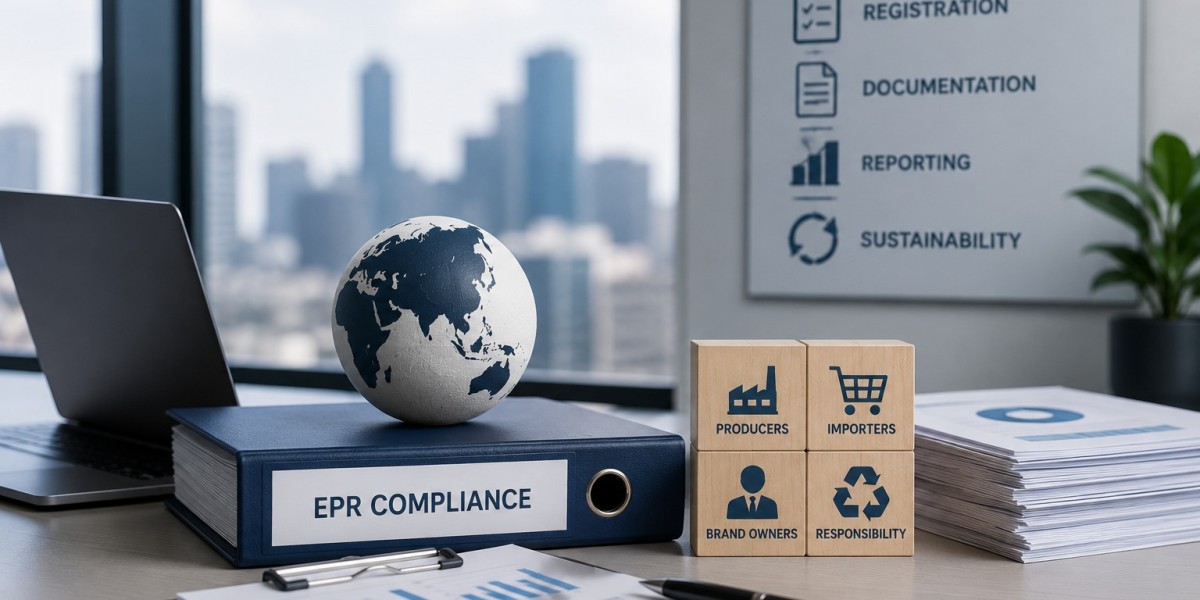

For many businesses, environmental responsibility begins as a regulatory task but quickly becomes an operational challenge involving data, vendors, waste flows, certificates, and reporting. EPR Registration in India is one of the first steps for businesses covered by applicable waste-management frameworks. However, registration alone is not the finish line. Long-term success depends on building reliable systems, maintaining accurate records, and treating environmental obligations as an ongoing business process rather than a once-a-year activity.
Understanding EPR Beyond Registration
Extended Producer Responsibility, or EPR, is based on the idea that producers should remain responsible for specified products or packaging beyond the point of sale, including their end-of-life management.
India operates category-specific EPR frameworks and online systems. CPCB maintains dedicated portals for regulated waste streams, and its battery EPR portal, for example, is designed to support registration and improve the traceability and transparency of obligations.
This means businesses need to understand exactly which regulatory framework applies to their products before building a compliance plan.
A Simple Business Story
Consider a fictional company called EcoNova Retail.
The company imports products, sells them through online marketplaces, and uses different types of packaging. Initially, the management team treats EPR as a documentation exercise. They assign the responsibility to one employee, collect information from different departments, and prepare records only when a deadline approaches.
Soon, problems begin.
The procurement team has one set of data. The finance team has another. Sales figures do not perfectly match the information used for environmental reporting. Vendor documents are stored across different email accounts.
EcoNova's problem is not a lack of effort. It is the absence of a system.
The company eventually creates a central compliance process involving finance, procurement, operations, legal, and sustainability teams. What was once a last-minute reporting problem becomes a routine management process.
The lesson is simple: good EPR compliance depends on coordination.
Step 1: Identify Your Exact Regulatory Scope
The first practical step is understanding what your business places on the market and which rules may apply.
Depending on the business model, environmental obligations may relate to regulated categories such as plastic packaging, electrical and electronic equipment, batteries, tyres, or other covered streams. Different frameworks may have different registration, reporting, and fulfilment mechanisms, so businesses should avoid assuming that one process applies universally. CPCB provides separate EPR portal access points, while specific rules and amendments are issued by the relevant authorities.
Create a Product and Packaging Map
Build a simple internal table containing:
- Product category
- Business role
- Packaging type
- Quantity placed on the market
- Import or domestic sourcing status
- Applicable compliance responsibility
- Reporting period
- Responsible internal department
This mapping exercise can reveal obligations that are easy to miss.
For example, the sales team may think only about the finished product, while the compliance team may also need information about packaging materials.
Step 2: Build One Reliable Source of Data
Many compliance problems begin with inconsistent numbers.
Imagine three departments reporting three different quantities for the same period. Even when the differences are small, correcting them later can require substantial time.
Create a Monthly Data Routine
Instead of collecting data only before a filing deadline, establish a monthly process.
Ask the relevant teams to submit:
- Sales volumes
- Import quantities
- Production data
- Packaging consumption
- Returns or damaged goods data
- Recycling and recovery records
- Supporting invoices and documents
The goal is to create one controlled source of truth.
Strong EPR compliance becomes much easier when data is collected continuously rather than reconstructed retrospectively.
Step 3: Connect Compliance With Operations
Environmental responsibility should not sit entirely with one employee or outside consultant.
Procurement decisions influence materials. Sales teams generate volume information. Finance teams maintain invoices. Operations teams understand physical material flows.
Assign Clear Responsibilities
A useful responsibility structure may look like this:
Management: Approves policy and resources.
Compliance team: Tracks obligations and documentation.
Finance team: Verifies invoices and transaction data.
Procurement team: Provides supplier and material information.
Operations team: Supports quantity reconciliation.
Authorised partners or service providers: Carry out defined waste-management or fulfilment activities according to the applicable framework.
The exact structure will vary from company to company, but accountability should always be clear.
Step 4: Plan EPR Fulfillment Early
One of the most common mistakes is leaving fulfilment planning until the end of a reporting period.
A better approach is to estimate obligations early, monitor progress regularly, and identify gaps before they become urgent.
For businesses looking to better understand the operational side of the process, this guide to EPR Fulfillment provides additional context around managing obligations and building a structured approach.
Create a Quarterly Review
At the end of every quarter, compare:
- Estimated obligation
- Actual business volume
- Fulfilment completed
- Supporting documents available
- Remaining gap
- Upcoming deadlines
This simple review can make year-end compliance far less stressful.
For some regulated categories, official portals are intended to support traceability, registration, reporting, and accountability in fulfilment. CPCB's battery portal explicitly describes registration requirements for relevant entities and its role as a central data repository for the implementation of the Battery Waste Management Rules.
Step 5: Check Vendors Carefully
A compliance strategy is only as reliable as the documents and operational work supporting it.
Before engaging a waste-management or recycling partner, conduct basic due diligence.
Questions to Ask
Ask potential partners:
- Are your registrations current?
- Which waste categories are you authorised to handle?
- What records will you provide?
- How is material movement documented?
- Who is responsible for portal-related actions?
- How often will status reports be shared?
- What happens when there is a data mismatch?
Do not choose a partner based only on price.
The cheapest option can become expensive if documentation is incomplete or if reported quantities cannot be properly reconciled.
Step 6: Prepare for Changes in Systems and Processes
Environmental regulations and digital compliance systems can evolve.
For example, CPCB's plastic packaging portal reported a transition in 2026 from the existing portal to a newly developed common EPR portal, with registered user data being migrated.
This illustrates an important operational lesson: businesses should not assume that the compliance process will remain technically unchanged forever.
Maintain Internal Ownership
Even when using professional support, keep internal copies of:
- Registration documents
- Submitted returns
- Transaction records
- Invoices
- Partner agreements
- Certificates and supporting evidence
- Internal calculation sheets
- Portal acknowledgements
A company should be able to understand and reconstruct its own compliance history.
Common Mistakes Businesses Should Avoid
Treating Registration as the Final Step
Registration is the beginning of an ongoing process. Reporting, recordkeeping, and fulfilment activities may continue according to the applicable regulatory framework.
Waiting Until the Deadline
Last-minute work increases the risk of missing records, mismatched quantities, and rushed decisions.
Using Different Data Across Departments
Sales, finance, procurement, and compliance teams should regularly reconcile their figures.
Ignoring Supporting Documents
A number in a spreadsheet is not always enough. Maintain the documentation that explains where the figure came from.
Depending Completely on One External Party
Consultants and service providers can support the process, but the business should retain visibility and internal control.
A Practical 90-Day Action Plan
Days 1–30: Understand
Map products, packaging, business roles, applicable obligations, and current registrations.
Identify data owners in each department.
Days 31–60: Organise
Create a central data repository and define a monthly reporting routine.
Review the status of external partners and supporting documents.
Days 61–90: Monitor
Create a dashboard showing:
- Business volume
- Estimated obligations
- EPR Fulfillment progress
- Documentation status
- Reporting deadlines
- Areas requiring corrective action
A simple dashboard can prevent small problems from becoming major compliance gaps.
Final Thoughts
Strong environmental compliance is built through routine, not panic.
Businesses that treat EPR compliance as a continuous operational process are better positioned to maintain organised records, understand responsibilities, and respond to reporting requirements efficiently.
The most practical strategy is to start with accurate scope identification, build reliable data systems, assign internal ownership, evaluate service partners carefully, and monitor EPR Fulfillment throughout the year.
Regulations and digital systems may evolve, but the foundation remains the same: understand your responsibility, maintain evidence, reconcile data regularly, and make compliance part of everyday business management.
A structured process does more than reduce last-minute pressure. It creates visibility, accountability, and confidence across the organisation.